

Unlike the fanciful claims of ancient Indians having mastered reconstructive surgery and being privy to the knowledge of nuclear power, the claim that India gave chess to the world is one with veracity. There is substantive proof that chess was invented in India (most likely evolved from the game Chaturang) and that it reached other parts of the world via Persia (the Arabic world called the game Shatranj). Arguably one of the most complex and intelligent of board games, there is much that chess does for it:
Chess teaches us valuable life lessons
(Image Source)
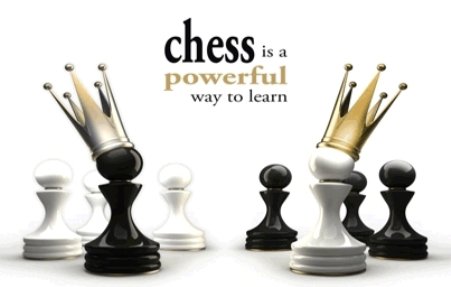
In his article The Morals of Chess, Benjamin Franklin said that chess was far more than “idle amusement” and that by playing chess we could learn foresight, circumspection and caution. A game of strategy, chess teaches us to plan several moves in advance and requires you to anticipate your opponent’s move. It highlights the importance of being cautious and prudent in life as in a board game. In other words chess teaches us to be foresighted and to plan for the future.
Chess also shows us that there is a way to recover even when you make a mistake. A wrong move is not necessarily your last one; there is always a way to recover even from a grievous error. So as any good chess player will tell you, it is important not to give up; for after all if you’re fallible, so is your opponent! Life, like chess, will forgive at least some mistakes.
Educational benefits of chess
(Image Source)
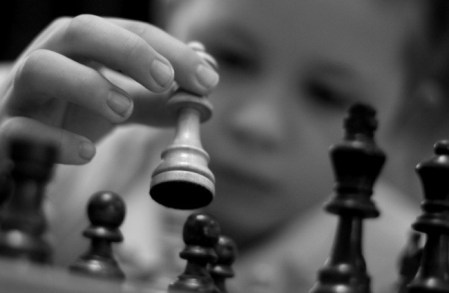
It is thought that chess can help in intellectual development, particularly in children. It is easy to see how an engrossing game such as this can improve concentration; something vitally important for school aged kids. That is why, several educational and other institutions have made chess a part of educational curricula to aid the all round development of children. One example is the American Chess-In-Schools program, which has been a part of the school system since the 80’s.
Health benefits of playing chess
(Image Source)
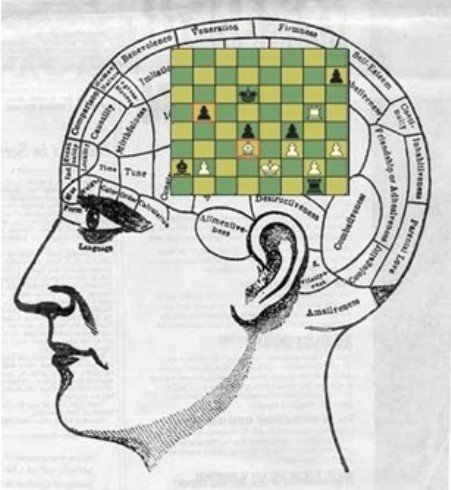
In the early 19th century it was demonstrated that chess players can have better memory and imagination. Proponents showed that problem solving abilities, which are honed by regular chess playing are an important component of intellect.
It is also thought that chess can spark creativity and actually raise IQ because it makes the player use both sides of the brain. Because chess is like exercise for the brain, it keeps the mind fitter and may be able to stave off cognitive decline and diseases such as Alzheimer’s.